{{key-takeaways}}
In B2B SaaS, your website is the first sales conversation. If it can't explain your product in 5 seconds and guide buyers to a demo, your paid acquisition budget is quietly leaking out the back.
You don't need a "web design agency." You need a team that gets trial-to-paid funnels, multi-stakeholder buying, and why CMOs in this category lose sleep. We evaluated every agency on this list against real client outcomes, Clutch ratings, and whether their work actually moves SaaS pipelines. No fluff. No paid placements.
What Is a SaaS Web Design Agency?
A SaaS web design agency is a design and development studio that specializes in marketing websites, product interfaces, and conversion assets for software-as-a-service companies. Unlike generalist agencies, they understand the specific dynamics of SaaS: subscription models, trial-to-paid conversion flows, multi-stakeholder buying, and the need to explain complex products in 5 seconds or less.
The difference shows up in the work. A generalist agency ships a beautiful homepage. A SaaS-specific agency ships a homepage that ranks, converts trials, survives a security review, and doesn't require a developer to update next quarter's pricing page.
Why You Can Trust Our Agency Picks
Here's the uncomfortable truth: most "best agencies" listicles are paid placements dressed up as research. This one isn't.
We are Foursets, a Webflow Premium Partner. B2B SaaS web design agency since 2021. About 90% of our clients are US and Australia-based SaaS companies across fintech, cybersecurity, EdTech, and analytics.
We've seen what breaks. Onboarding flows that don't convert. SaaS websites that look polished but fail to explain the product. Landing pages with no clear next step.
To build this list, we evaluated each agency against six criteria:
- Verified rating and review volume. Minimum 4.8 rating with at least 9 verified reviews on Clutch or an equivalent platform (DesignRush, G2). We weighted agencies with higher review counts more heavily.
- Demonstrated B2B SaaS portfolio. Not just SaaS logos, but case studies showing real product challenges solved. Screenshots alone don't count.
- Measurable client outcomes. Traffic growth, conversion improvements, revenue attribution. Agencies that publish results show they care about them.
- Team structure. In-house vs. outsourced matters. Agencies with senior, dedicated teams consistently outperform those that pass work to subcontractors.
- Transparent pricing. Agencies that hide rates or lock pricing behind NDAs are harder to evaluate. We prioritized those with published or discoverable pricing.
- SaaS-specific experience. Generalist portfolios were disqualified. We looked for agencies that regularly work with subscription products, PLG models, and multi-stakeholder sales cycles.
Yes, Foursets is first on this list. This is our blog. But every other agency here earned its place by the same criteria we'd apply to ourselves.
TL;DR: The Best SaaS Design Agencies at a Glance
If you're short on time, here's a quick comparison. The full breakdown is below.
| Agency | Location | Founded | Team | Pricing | Rating | Best For |
|---|---|---|---|---|---|---|
| Foursets | Warsaw, Poland | 2021 | ~20 | $50-99/hr | ⭐⭐⭐⭐⭐ 4.9 (29) Clutch | B2B SaaS marketing websites on Webflow |
| Amply | Salt Lake City, USA | 2020 | ~34 | $100-149/hr | ⭐⭐⭐⭐⭐ 4.9 (9) DesignRush | B2B Webflow migrations & SaaS sites |
| Eleken | Kyiv, Ukraine | 2015 | 100+ | $25-49/hr | ⭐⭐⭐⭐⭐ 4.9 (122) Clutch | Subscription-based SaaS product design |
| Arounda | Estonia (HQ) | 2016 | 10-49 | $25-49/hr | ⭐⭐⭐⭐⭐ 5.0 (80) Clutch | Fintech, AI & Web3 SaaS platforms |
| Cieden | Toronto, Canada | 2016 | ~45 | $50-99/hr | ⭐⭐⭐⭐⭐ 4.9 (45) Clutch | Complex logic & AI products |
| Ramotion | San Francisco, USA | 2009 | 70 | $150-199/hr | ⭐⭐⭐⭐⭐ 4.9 (29) Clutch | Branding + SaaS UX unified systems |
| Phenomenon Studio | Dover, USA (HQ) | 2019 | 50-249 | $50-99/hr | ⭐⭐⭐⭐⭐ 5.0 (51) Clutch | SaaS, EdTech, FinTech & Healthcare UX |
| CodeTheorem | Ahmedabad, India | 2020 | ~25 | <$25/hr | ⭐⭐⭐⭐⭐ 5.0 (9) Clutch | Budget full-cycle build for startups |
| UX Studio | Budapest, Hungary | 2013 | 50+ | $50-99/hr | ⭐⭐⭐⭐⭐ 5.0 (41) Clutch | Research-driven complex SaaS web apps |
| Baunfire | San Jose, USA | 2001 | ~32 | $150-199/hr | ⭐⭐⭐⭐⭐ 4.9 (32) Clutch | Premium marketing websites for SaaS |
| Outcrowd | Lewes, USA | 2016 | 10-49 | $50-99/hr | ⭐⭐⭐⭐⭐ 4.9 (77) Clutch | Stage-aware SaaS startup branding |
| Embacy | Barcelona, Spain | 2018 | 10-49 | $50-99/hr | ⭐⭐⭐⭐⭐ 5.0 (65) Clutch | Webflow-focused SaaS site builds |
| Qream | Kyiv, Ukraine | 2018 | 10-49 | $100-149/hr | ⭐⭐⭐⭐⭐ 5.0 (44) Clutch | Bold branding for design-aware SaaS |
| WANDR | Los Angeles, USA | 2016 | ~30 | $150-199/hr | ⭐⭐⭐⭐⭐ 5.0 (34) Clutch | Growth-stage SaaS UX & product strategy |
| Clay | San Francisco, USA | 2009 | 78 | $150-199/hr | ⭐⭐⭐⭐⭐ 4.8 (32) Clutch | Enterprise-level SaaS interfaces |
Best Web Design Agencies for SaaS Companies
Not every design agency understands SaaS products. Most can make things look polished. Far fewer understand the specific challenge of turning a complex platform into a clear, convincing website that drives signups, demos, and pipeline.
Here's who does.
1. Foursets
Specialization
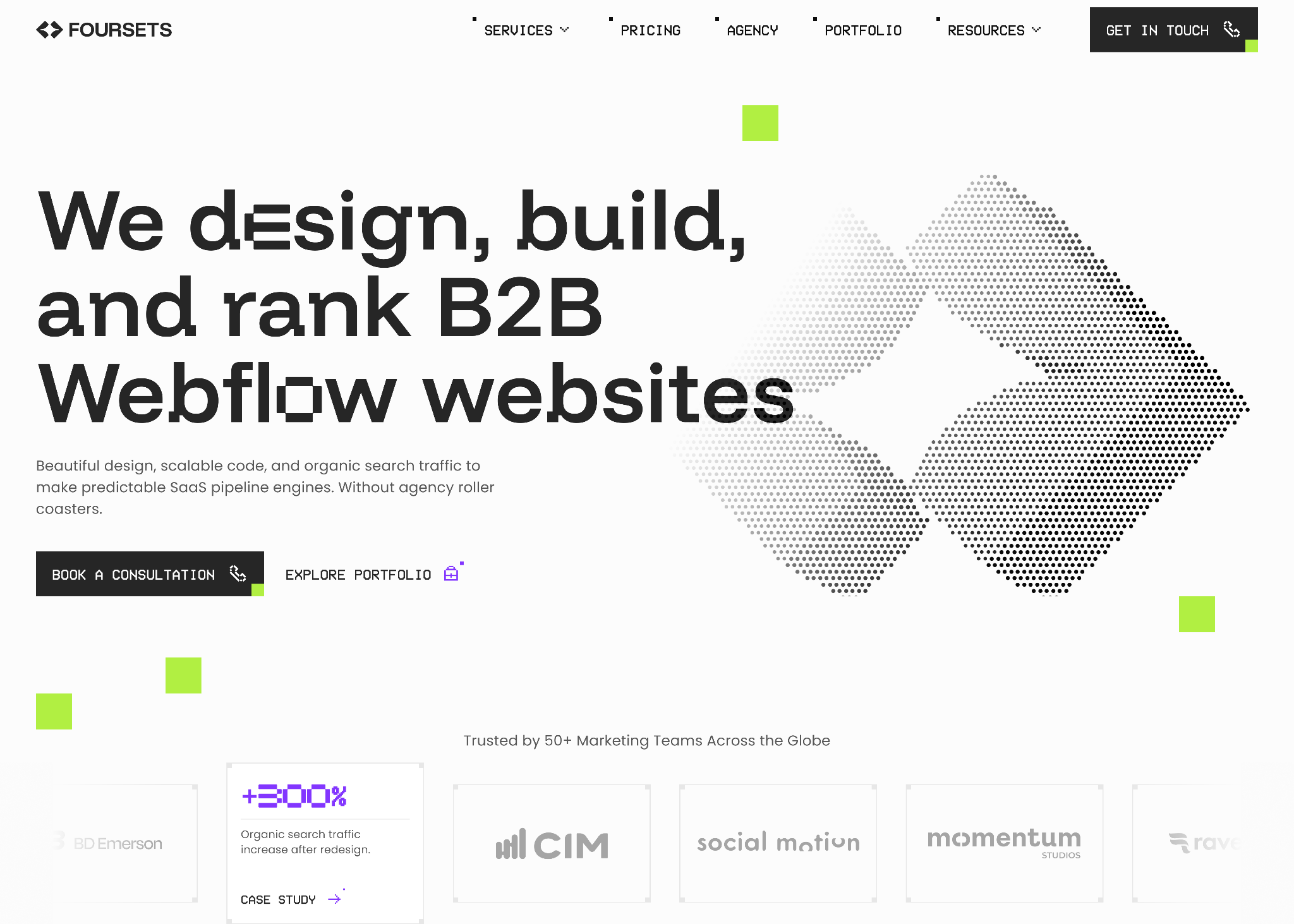
Foursets is built for one thing: B2B SaaS websites that ship on time and actually convert. About 90% of our clients are US and Australia-based SaaS teams, from funded startups to growth-stage platforms.
Three in-house departments cover the full scope: Design, Webflow Development, and SEO. No outsourcing. No junior handoffs. No three-vendor coordination headaches. The senior team you meet on the sales call is the team that ships your site.
Here's what makes the difference. A 96.8% on-time delivery rate since 2021. A "No Black Box" policy: staging environments and Slack updates from day one, not just at the final reveal. And 48-Hour Velocity: drop a task in Slack, watch it go live in days, not quarters.
- Founded: 2021
- Location: Warsaw, Poland (serving US and Australian SaaS teams)
- Team Size: ~20
- Founder: Nick Rybak
- Clutch Rating: 4.9 (29 reviews)
- Hourly rate: from $60/hr
- Build projects: from $10,000
- Retainers (month-billed, no lock-in): from $3,000/mo (Design, Webflow Development, SEO, SEO + AEO)
- Hourly packages (72-hour turnaround): from $900/mo
- Retainer: One-time projects (Webflow migration, design and development) from $5,000. Retainers from $3,000/month.
- Services: SaaS website design, Webflow development, SEO, brand identity, UI/UX design, custom animations
- Notable SaaS clients: Setproduct · CIM · Penti · Dune Security · Element451 · Flowlabs · Ravetree · Aware Technologies
Best for: B2B SaaS companies that want a high-converting Webflow site without managing multiple vendors
Highlights of SaaS case studies:
- Setproduct (digital products marketplace SaaS) — +300% organic search traffic and +30% conversion rate after Tilda-to-Webflow redesign; first-page rankings for target keywords.
- CIM (Series A SaaS, building intelligence platform) — +33% organic impressions and +11.5% clicks in 5 months purely from technical SEO and Webflow rebuild.
- Penti (B2B SaaS, AI-powered pentesting) — +2,500% traffic growth in the first year; shipped on a hardened enterprise CDN architecture that was blocking analytics, Tag Manager, and SEO meta tags. Launched without breaking the security posture.
- Dune Security (B2B SaaS, cybersecurity) — 8+ month embedded retainer: 15+ solution pages, 4 CMS collections (blog, case studies, events, content library), and 3+ major homepage iterations shipped continuously.
- Element451 (EdTech SaaS, 51-200 employees) — full conference website rebuild in under 1 month, repeated two years in a row. Trusted partner for high-stakes, tight-deadline launches.
- Flowlabs (Geospatial AI SaaS, DoT clients) — full Webflow build delivered in 4 weeks, twice (2024 launch + 2025 restructure). HubSpot integration wired from day one.
- Ravetree (PM software SaaS) — migrated blog from a separate subdomain to the main domain with zero SEO loss and a full design refresh.
Awards & Recognition
- Webflow Premium Partner (one of the first agencies in Eastern Europe to reach that tier)
- Clutch Champion 2024
- Awwwards Honorable Mention ×2
"Foursets demonstrated that they were able to deliver exactly what we were looking for. Your team started 'getting it right' from the first go, and we knew instantly we could rely on you. You invested your time into understanding our company and our expectations, which allowed you to get it right the first time. As a startup, we're still evolving and our website should reflect that. You help us keep our website a living thing and reflective of our developing brand."
Kateryna Dmytriyeva, Growth Marketing Manager, CIM.io
2. Amply
Specialization
Amply is a Webflow Enterprise Partner built exclusively for B2B brands, with a strong focus on SaaS, AI, fintech, and cybersecurity. They’ve delivered 150+ Webflow projects for high-growth teams including Dell, ZenHub, Anvilogic, Awardco, Zeni, and WorkSpan.
Rather than treating websites as design projects, Amply builds them as revenue infrastructure, focused on pipeline generation, conversion performance, and long-term scalability.
They’re especially strong in platform migrations, helping companies move from WordPress, Wix, and custom CMS setups into Webflow without SEO loss, broken workflows, or marketing team slowdowns.
Their work combines design, development, CRO, and SEO strategy, making them a strong fit for B2B SaaS companies that need more than just a visual redesign.
Notable outcomes include a 10x lift in conversions after a WordPress-to-Webflow migration and a 56x return on booked revenue directly attributed to a website they built.
Best for: B2B SaaS brands looking for a focused Webflow Enterprise Partner with strong migration expertise and a conversion-first approach.
- Location: Salt Lake City, Utah, USA (Silicon Slopes)
- Founded: 2020
- Team Size: ~34
- Rating: 4.9 (9 reviews) on DesignRush
- Hourly Rate: $100-149/hr
- Min. Project: $15,000+ ($10,000+ for SaaS websites)
- Services: Webflow design and development, branding, website migration, SEO audit and optimization, conversion optimization, Webflow integrations and maintenance
- Notable clients: Dell, ZenHub, Anvilogic, Awardco, Zeni, WorkSpan
Best for: B2B SaaS brands that want a focused Webflow Enterprise Partner with proven migration experience
3. Eleken
Specialization
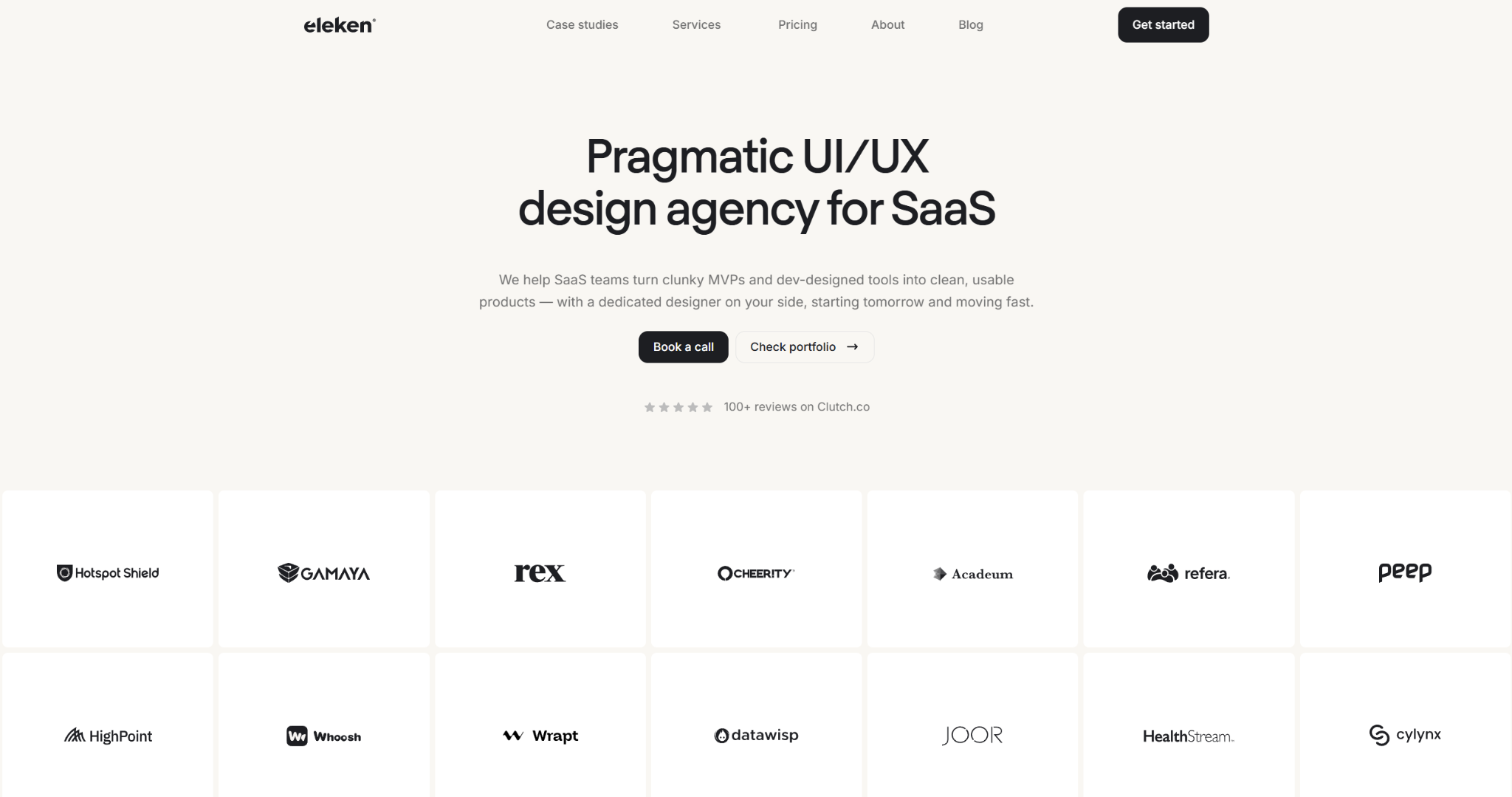
Eleken works exclusively with SaaS companies. They turn down everything else. That single focus shows in the consistency and speed of their delivery.
Their model is subscription-based. One flat monthly fee. A dedicated design team embedded directly in your workflow. It scales up or down as your needs change.
They are not the flashiest agency on this list, but they are one of the most consistent. Eleken has helped over 200 SaaS products in fintech, geospatial AI, and logistics clean up complex interfaces, accelerate onboarding flows, and improve product usability.
- Location: Kyiv, Ukraine (with presence in US)
- Founded: 2015
- Team Size: 100+
- Founder: Ilya Dmitruk
- Clutch Rating: 4.9 (122 reviews)
- Hourly Rate: $25-49/hr
- Pricing: From $3,799/month (subscription model)
- Services: SaaS product UX/UI, SaaS landing page design, UX audits, prototyping, ongoing design support
- Notable clients: Astrea, TextMagic, Gamaya
Best for: Early-stage and growth-stage SaaS that need continuous design support without a full-time hire
4. Arounda
Specialization
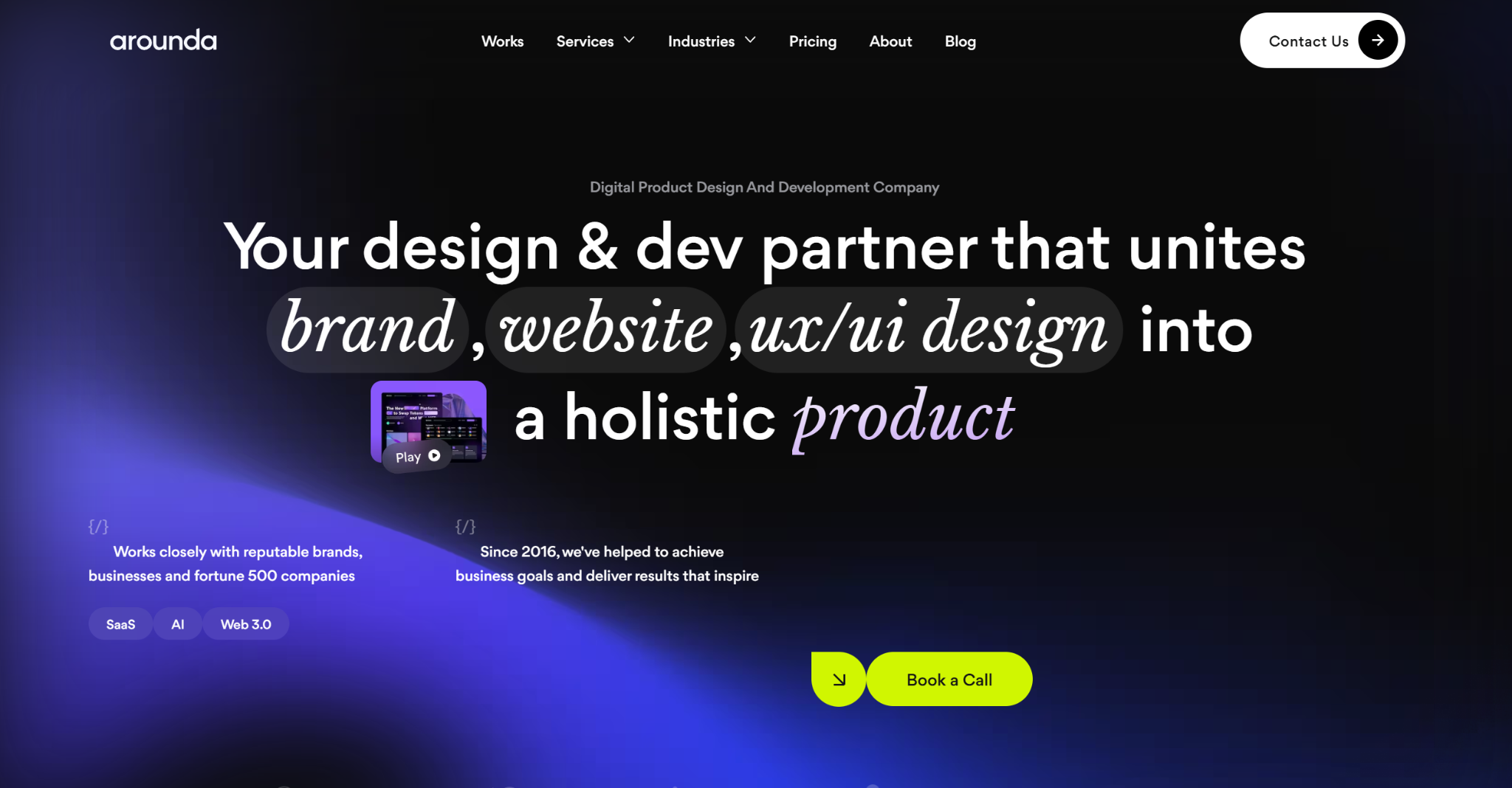
Arounda specializes in SaaS platforms that deal with complexity. Fintech dashboards. AI output visualization. Web3 interfaces. They are good at making hard things feel easy.
Their approach starts with user research. They map flows, identify where users hesitate, then design interfaces that remove friction. Their marketing site work also matches the product tone, which is rarer than it sounds.
Clients report reductions in support tickets and improvements in trial-to-paid conversion after Arounda redesigns. They serve both early-stage startups and funded platforms.
- Location: Estonia (HQ); distributed across Netherlands, UK, Romania, US, UAE, Australia
- Founded: 2016
- Team Size: 10-49
- Founder: Vlad Gavriluk
- Clutch Rating: 5.0 (80 reviews)
- Hourly Rate: $25-49/hr
- Min. Project: $25,000+
- Services: SaaS UX/UI design, landing page design, branding, front-end development
- Notable clients: Interprefy, Players Health
Best for: SaaS teams in fintech, AI, or Web3 who need UX clarity in complex products
5. Cieden
Specialization
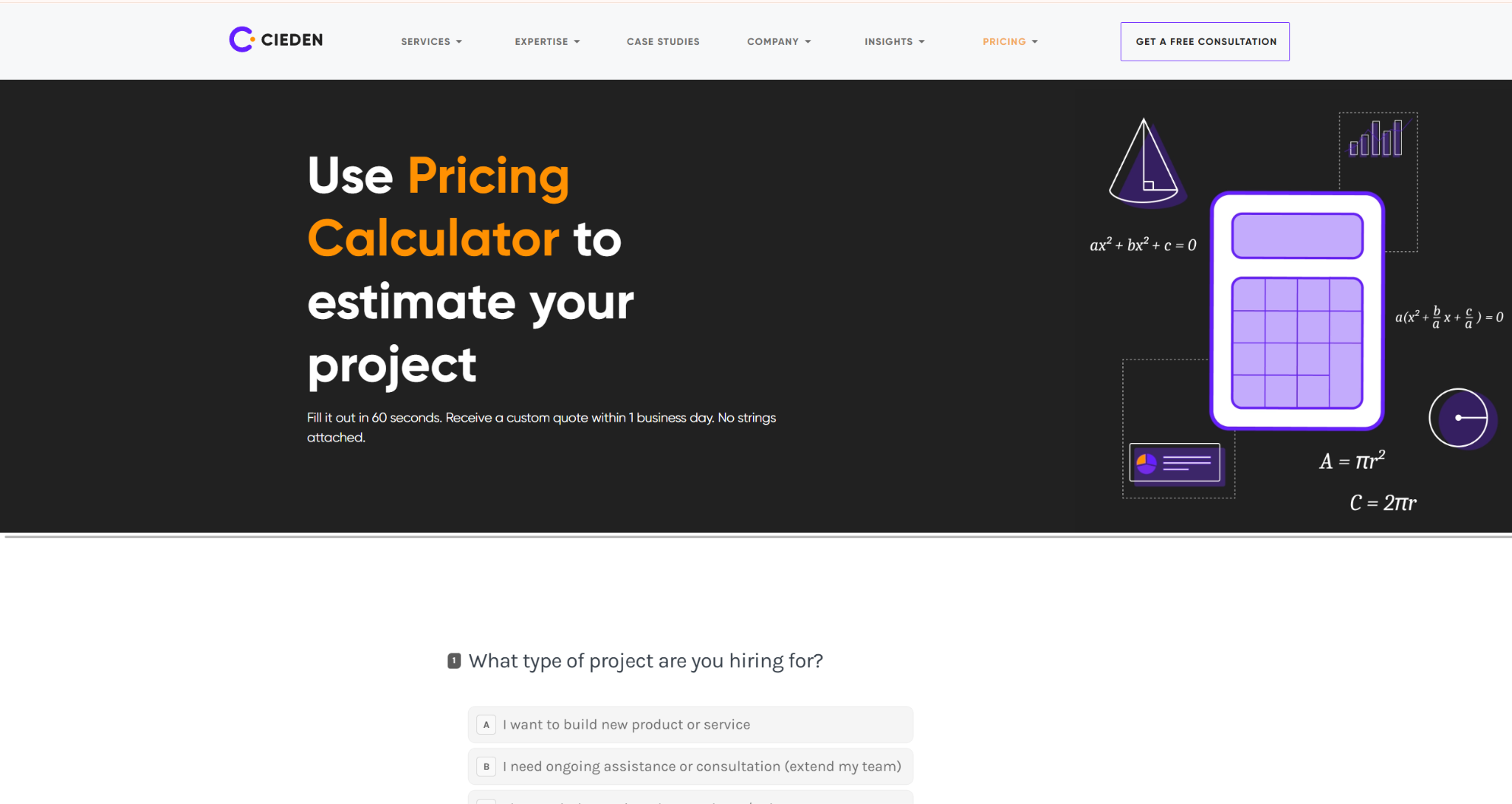
Cieden handles the hard stuff. Complex product logic, AI-driven workflows, data-heavy interfaces. They have worked with enterprise clients including Blizzard and Apollo, which signals they are not afraid of big, complicated SaaS projects.
They combine product design with deep understanding of enterprise buyers and how they evaluate software. Their work is precise, well-structured, and conversion-aware. If your SaaS product involves complex logic, Cieden has the experience to untangle it visually.
- Location: Toronto, Canada (with offices in Lviv, Ukraine and Wilmington, Delaware)
- Founded: 2016
- Team Size: ~45
- Founders: Yurij Mykhasyak & Iryna Serednia
- Clutch Rating: 4.9 (45 reviews)
- Hourly Rate: $50-99/hr
- Min. Project: $10,000+
- Services: SaaS UX/UI design, product design, design systems
- Notable clients: Blizzard, Apollo
Best for: SaaS products with complex logic, data visualization needs, or AI-driven interfaces
6. Ramotion
Specialization
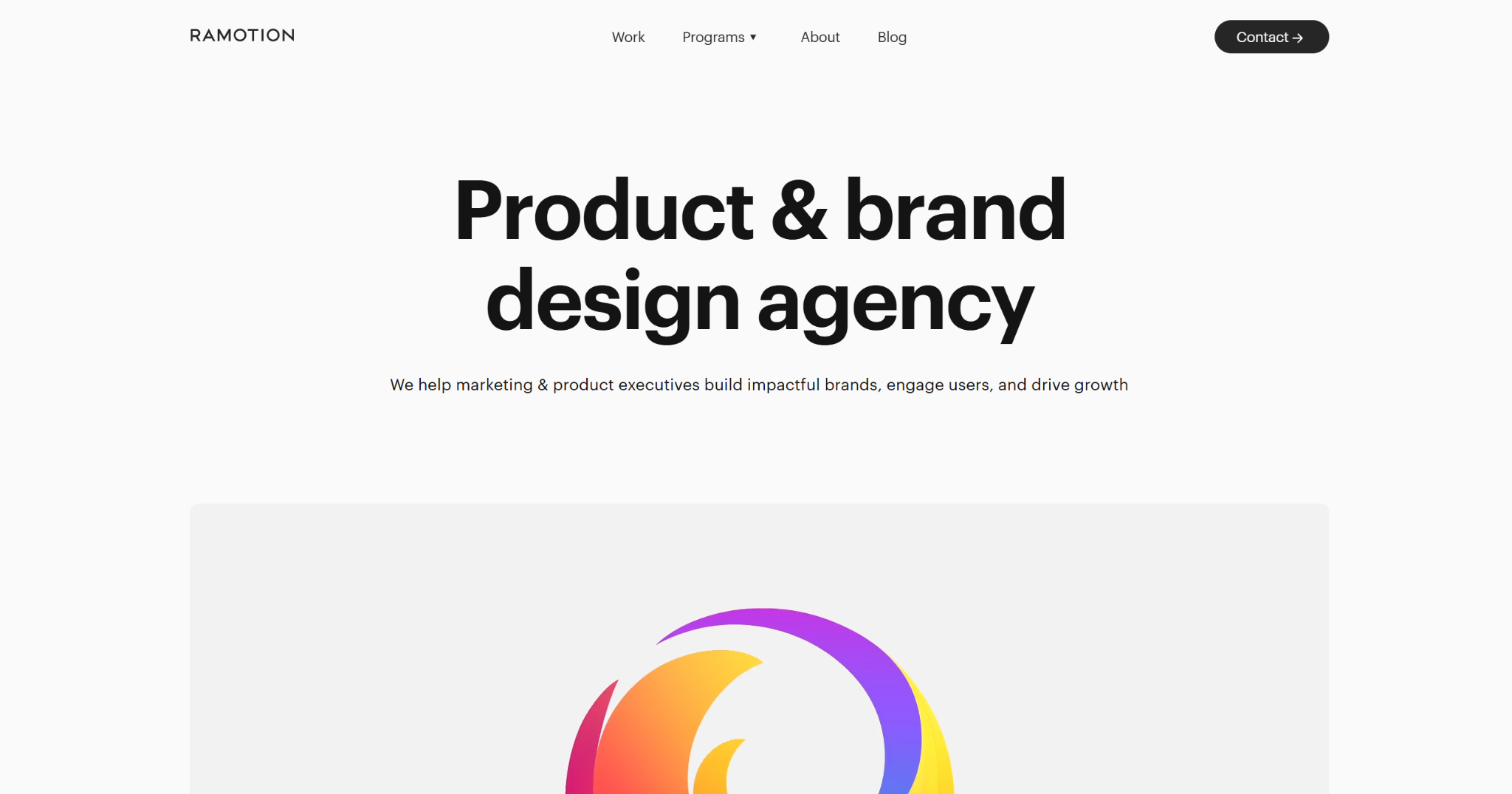
Ramotion does brand and product design together. That is their core strength. They built the redesign before Flatfile's $50M round, and developed unified design systems for Salesforce, Descript, Mozilla, and Xero.
If your SaaS brand needs to feel as premium as your product promises, Ramotion builds that foundation. They create systems that scale across product screens, SaaS marketing sites, and everything in between.
- Location: San Francisco, USA (with offices in New York and Los Angeles)
- Founded: 2009
- Team Size: 70
- Founder: Denis Pakhaliuk
- Clutch Rating: 4.9 (29 reviews)
- Hourly Rate: $150-199/hr
- Min. Project: $50,000+
- Services: SaaS product UI/UX, website design, branding, design systems
- Notable clients: Salesforce, Descript, Mozilla, Xero, Flatfile
Best for: Scaling SaaS companies that need brand and UX to grow together as a unified system
7. Phenomenon Studio
Specialization
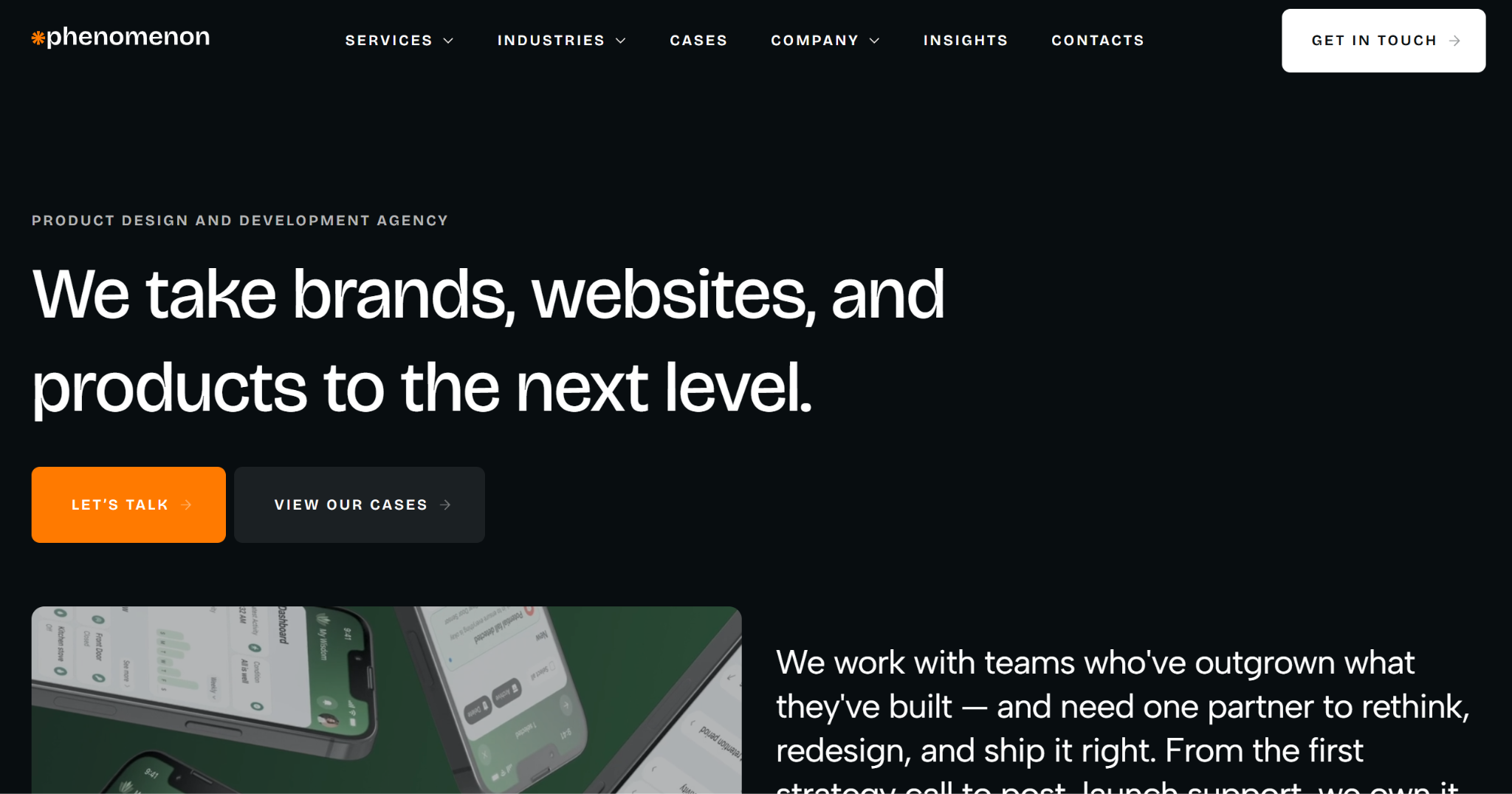
Phenomenon Studio is a full-cycle SaaS design company with mid-to-senior specialists across multiple regions. They cover the full product lifecycle: from UX audit and discovery to UI design, branding, motion, and front-end development. No outsourcing, no junior teams.
Their focus spans SaaS products, EdTech, FinTech, and Healthcare platforms. They are especially strong on products where compliance and user trust are part of the design challenge. Clients consistently note fast delivery, clear communication, and designs that translate directly into measurable product improvements.
- Location: Dover, USA (HQ); offices in Estonia and Switzerland
- Founded: 2019
- Team Size: 50-249
- Founders: Valerii Filimonov & Polina Chebanova
- Clutch Rating: 5.0 (51 reviews)
- Hourly Rate: $50-99/hr
- Min. Project: $10,000+
- Services: SaaS UX/UI design, web and mobile development, MVP creation, UX audit, branding, motion design
Best for: SaaS startups and growth-stage teams that need a single agency to handle design, web development, and UX strategy end to end
8. CodeTheorem
Specialization
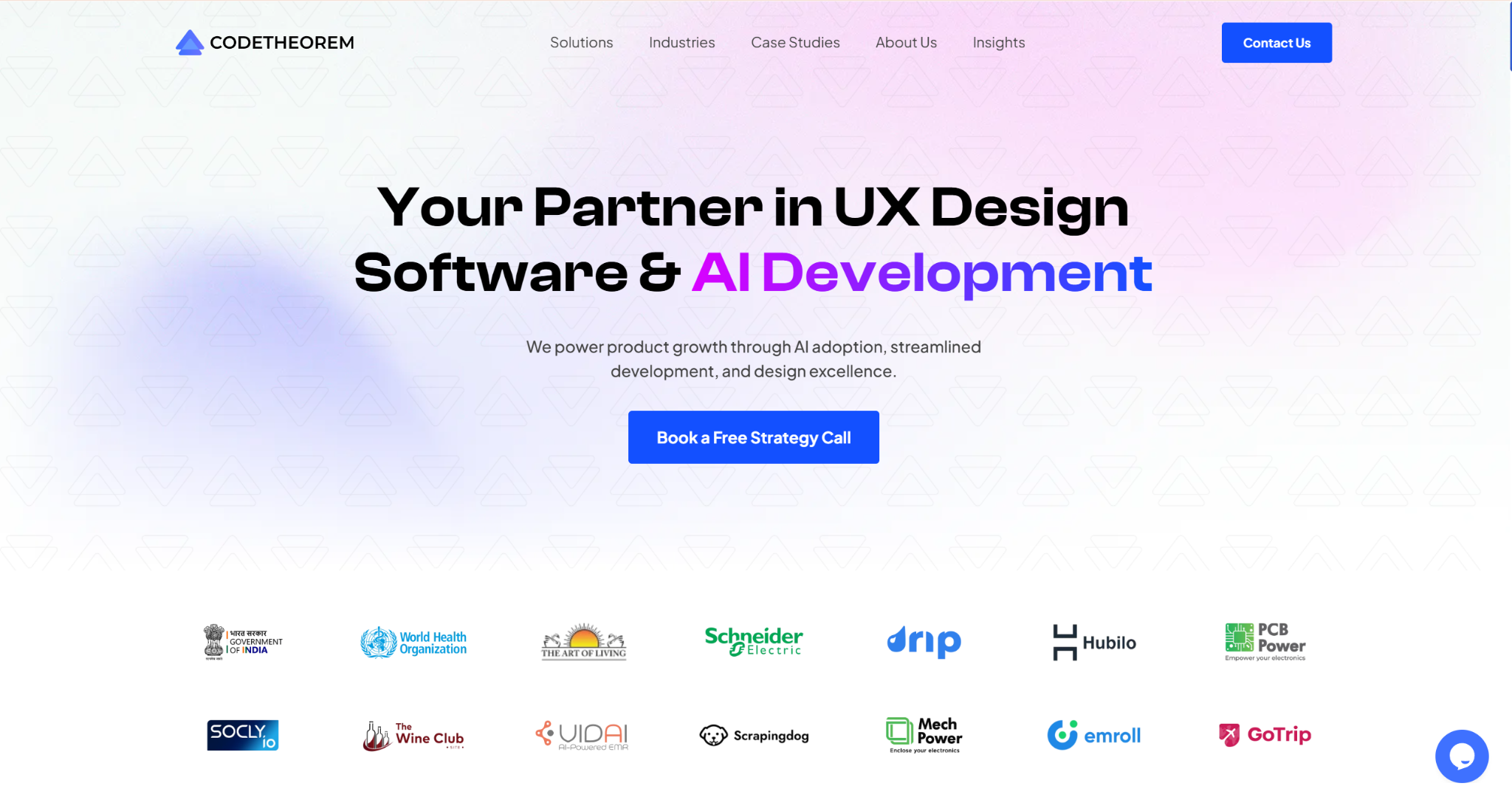
CodeTheorem is the lean option for startups that need both design and development from a single budget-friendly team. Their tight design-dev alignment reduces the typical back-and-forth that slows early-stage SaaS projects down.
They work mainly with fintech, analytics, and operations-heavy platforms. Their clients tend to be early-stage startups that need to move fast without burning runway.
- Location: Ahmedabad, India (also has office in Australia)
- Founded: 2020
- Team Size: ~25
- Founders: Vraj Trivedi & Prem Parmar
- Clutch Rating: 5.0 (9 reviews)
- Hourly Rate: <$25/hr
- Min. Project: $1,000+
- Services: SaaS UX/UI design, landing page design, design audits, branding, full-stack development
- Notable clients: EzyCheck, ResumePro
Best for: Early-stage SaaS startups that need a complete build at a startup-friendly budget
9. UX Studio
Specialization
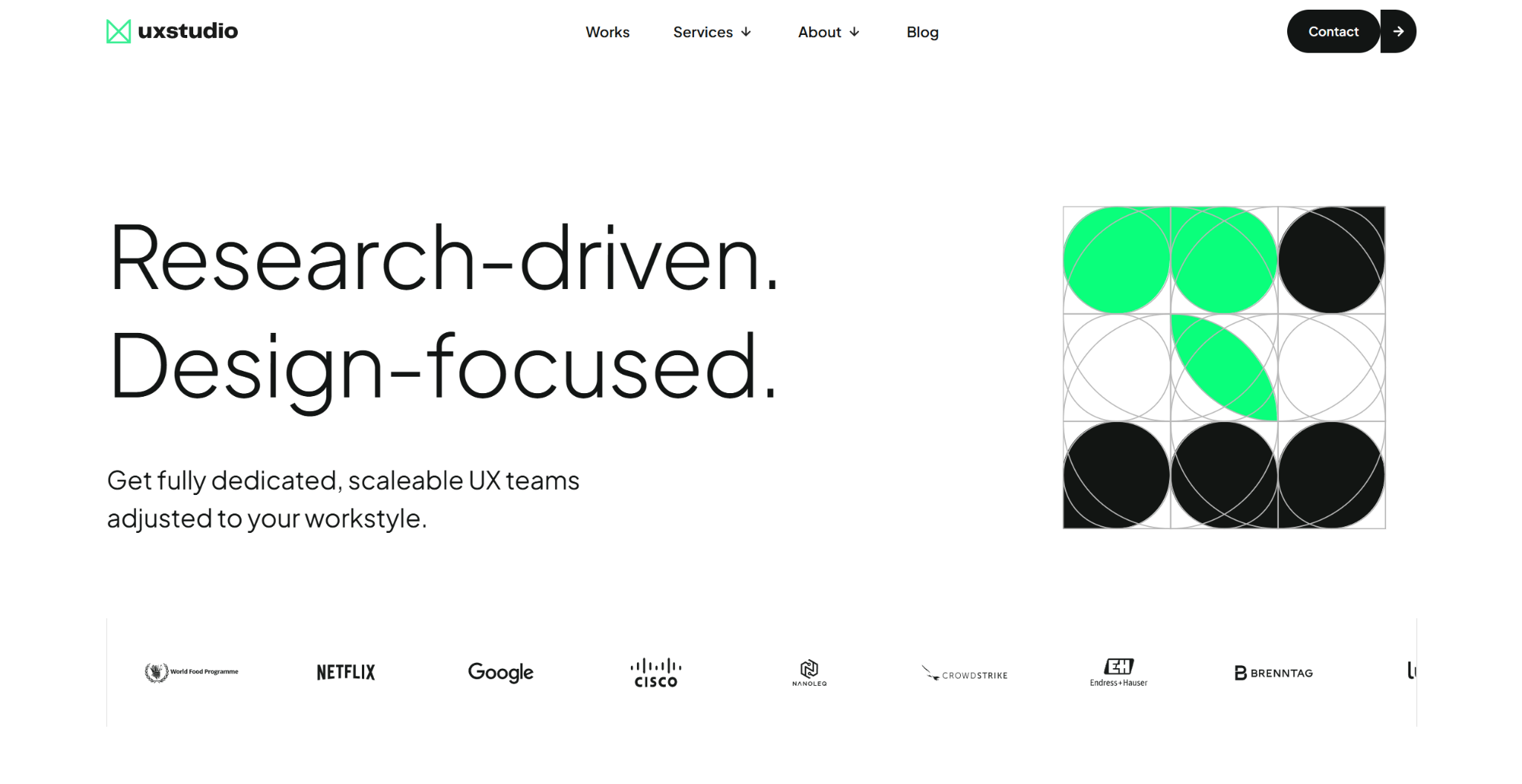
UX Studio brings over 10 years of experience designing complex SaaS web applications. They have also built and launched their own products: UXfolio and Copyfolio, both with loyal active userbases. That firsthand product experience sets them apart. They know what it takes to ship SaaS products, not just design them.
They integrate directly into your team, talk to your users, and build product strategy from research rather than assumptions. If you need a design partner who acts like an in-house team, UX Studio fits.
- Location: Budapest, Hungary
- Founded: 2013
- Team Size: 50+
- Founder: Dávid Pásztor
- Clutch Rating: 5.0 (41 reviews)
- Hourly Rate: $50-99/hr
- Min. Project: $10,000+
- Services: SaaS UX/UI design, user research, prototyping, product strategy
Best for: SaaS teams with complex web apps that need deep research and embedded collaboration
10. Baunfire
Specialization
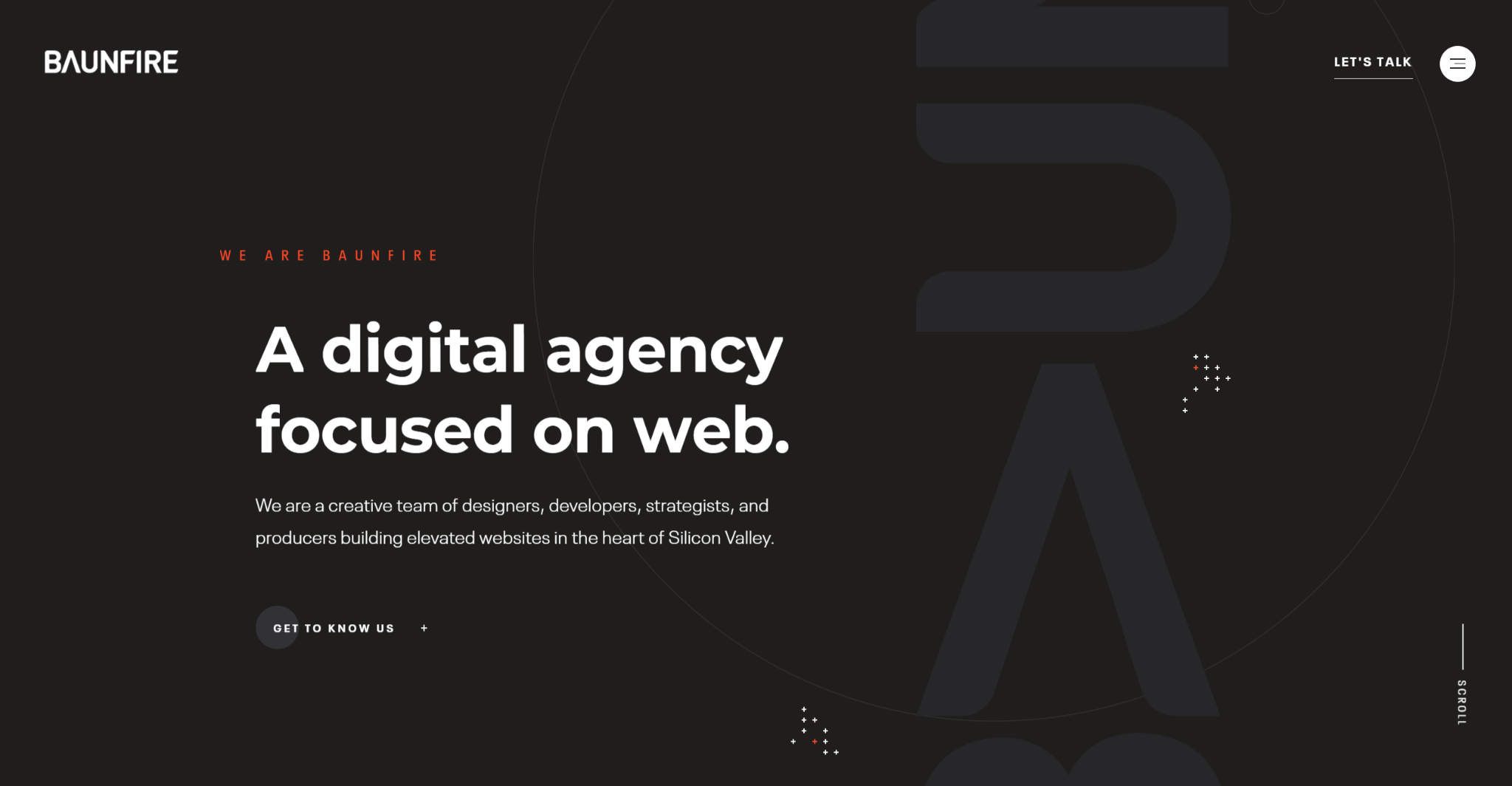
Baunfire focuses exclusively on marketing websites for established SaaS brands. If you need a category-defining SaaS website for an enterprise product, they are one of the strongest options in North America.
Silicon Valley-based with a clear niche. Their sites are design-led, fast-loading, and built for conversion. They work across multiple platforms, including Webflow, for speed and marketing flexibility. Not the right fit for early-stage teams on lean budgets. Exactly right for growth and enterprise SaaS brands that need premium execution.
- Location: San Jose, California, USA
- Founded: 2001
- Team Size: ~32
- Founder: Juan Sanchez
- Clutch Rating: 4.9 (32 reviews)
- Hourly Rate: $150-199/hr
- Min. Project: $75,000+
- Services: SaaS marketing website design, Webflow development, SEO, CRO, motion design
Best for: Enterprise and established SaaS companies that want top-tier North American agency execution
11. Outcrowd
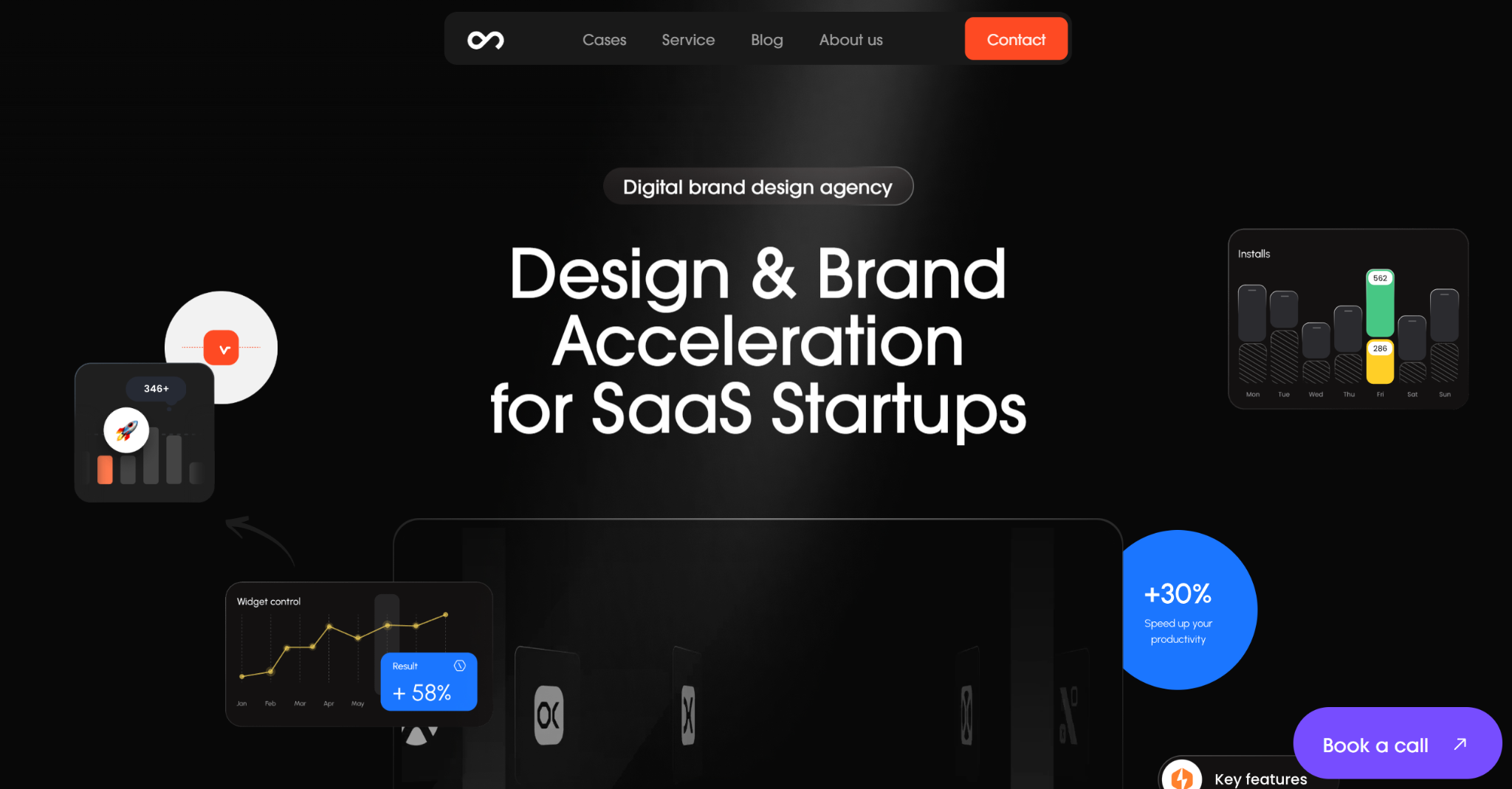
Specialization
Outcrowd is stage-aware in a way most agencies are not. They explicitly map their services to pre-seed, seed, and Series A SaaS startups. They publish their funding outcomes openly: a notable share of their pre-seed clients secure funding, and a meaningful portion of their seed clients reach Series A.
That is not generic marketing copy. It is a brand presence signal worth taking seriously.
- Location: Lewes, USA (with secondary location in Kyiv, Ukraine)
- Founded: 2016
- Team Size: 10-49
- Founders: Erik Messaki & Natalia
- Clutch Rating: 4.9 (77 reviews)
- Hourly Rate: $50-99/hr
- Min. Project: $5,000+
- Services: SaaS brand design, website design, investor pitch marketing assets
Best for: Early-stage SaaS founders preparing for funding rounds or product launches
12. Embacy
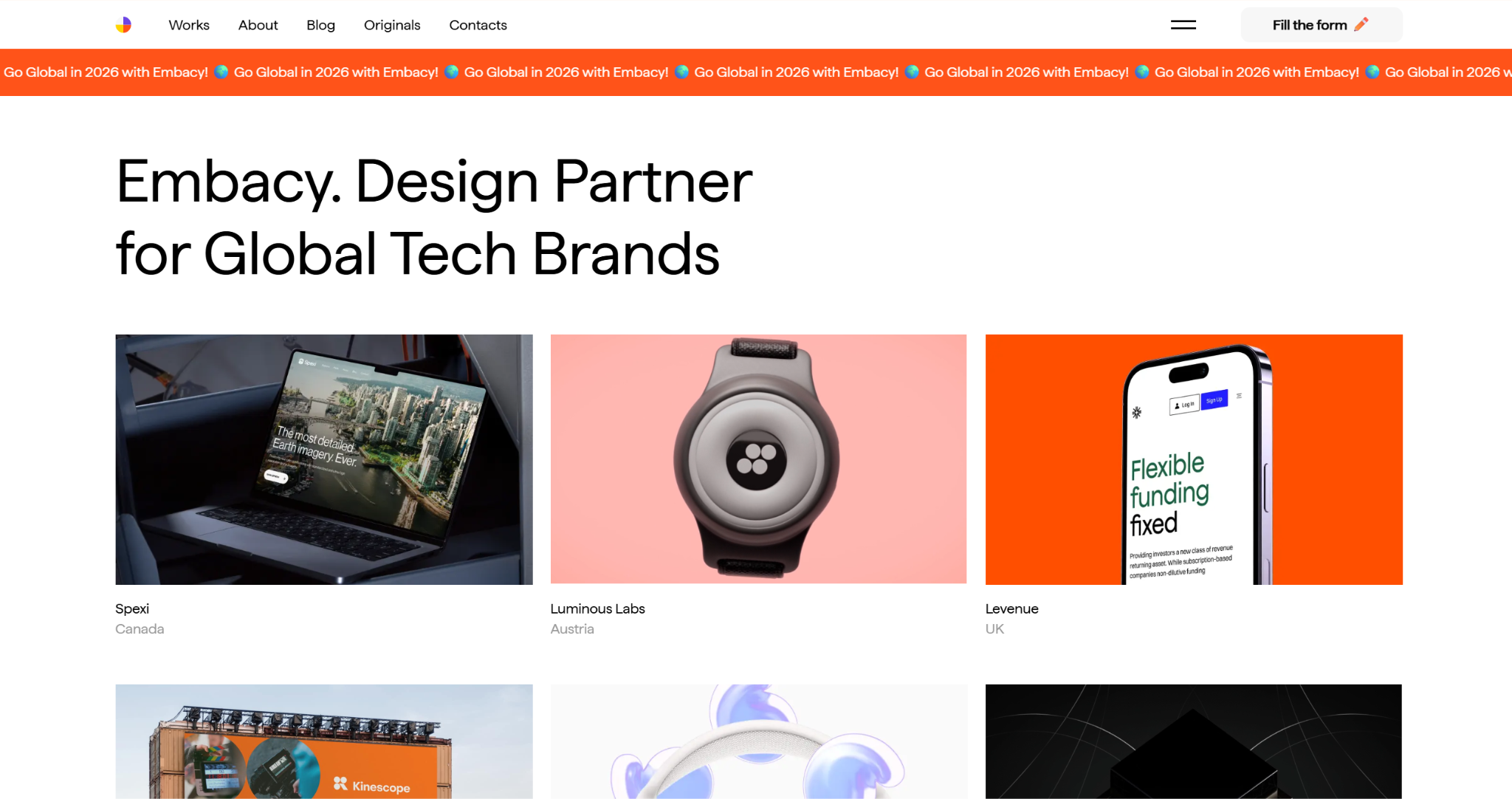
Specialization
Embacy builds exclusively on Webflow. If you want a focused European studio with a clear process and no distractions, Embacy delivers. Their sprint-based process covers branding, SaaS website design, UI/UX, illustration, motion, and development, all in-house.
What they do not offer is marketing strategy. You bring the direction. They build the execution. That is a good fit if you prefer to stay hands-on with your agency.
- Location: Barcelona, Spain (HQ); offices in France, Belgium, Cyprus, Armenia
- Founded: 2018
- Team Size: 10-49
- Founders: Vadim Orlov & Anton Andreev
- Clutch Rating: 5.0 (65 reviews)
- Hourly Rate: $50-99/hr
- Min. Project: $10,000+
- Services: Webflow design and development, branding, UI/UX, illustration, motion
Best for: SaaS teams that want a fast, focused Webflow build from a European studio with a predictable process
13. Qream
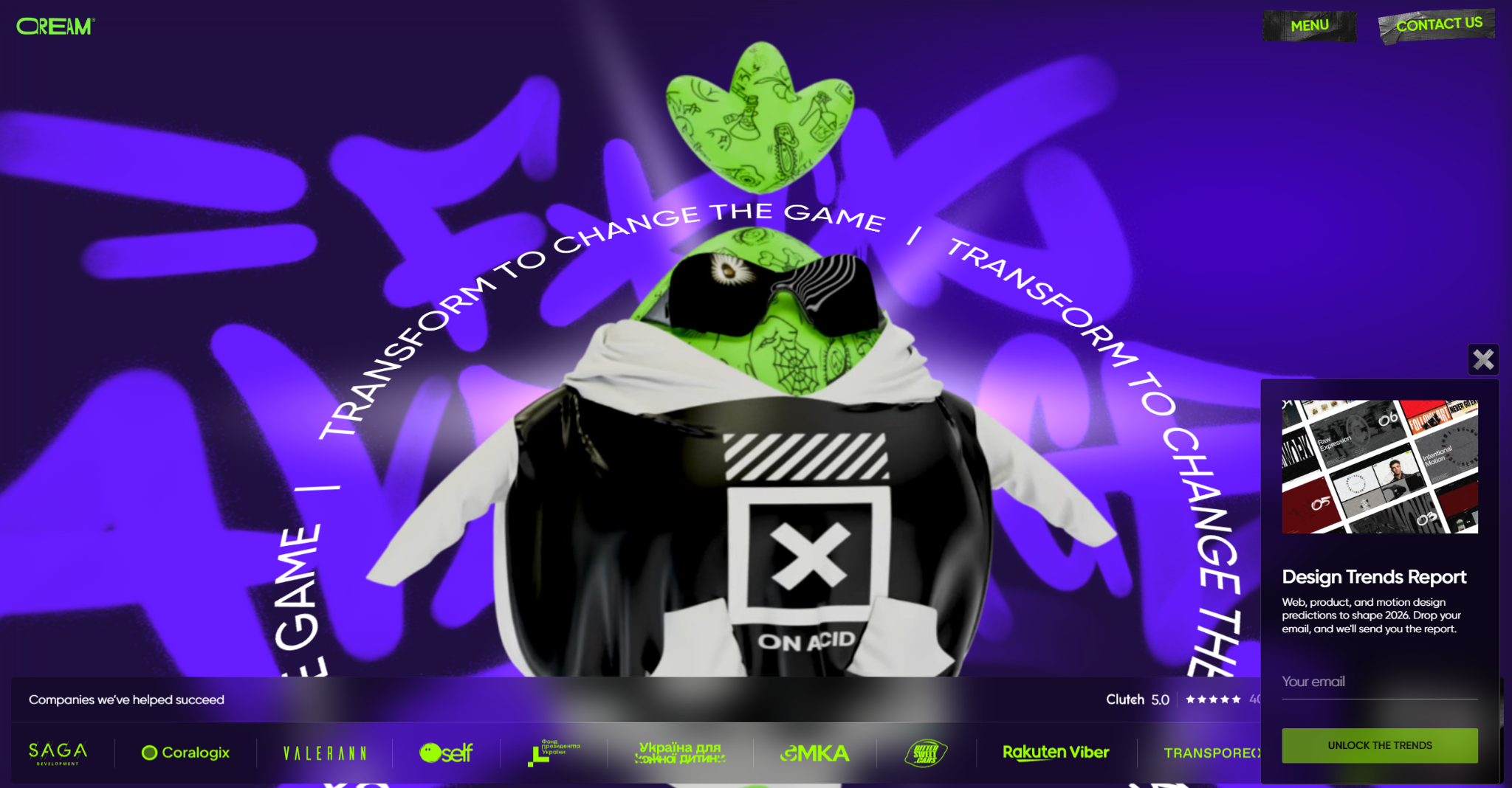
Specialization
Qream is for SaaS brands that want to stand out visually rather than blend in. Their designs are bold, inventive, and distinctly modern. Their creative team covers strategy, copy, design, 3D, motion, development, and QA, delivering custom design across multiple projects.
If your brand presence needs to make a strong first impression on a design-aware audience, Qream is worth a look.
- Location: Kyiv, Ukraine
- Founded: 2018
- Team Size: 10-49
- Founder: Bohdan Paladiichuk
- Clutch Rating: 5.0 (44 reviews)
- Hourly Rate: $100-149/hr
- Min. Project: $25,000+
- Services: SaaS brand design, website design, 3D, motion, Webflow development
Best for: SaaS companies that need bold visual differentiation in crowded, competitive markets
14. WANDR
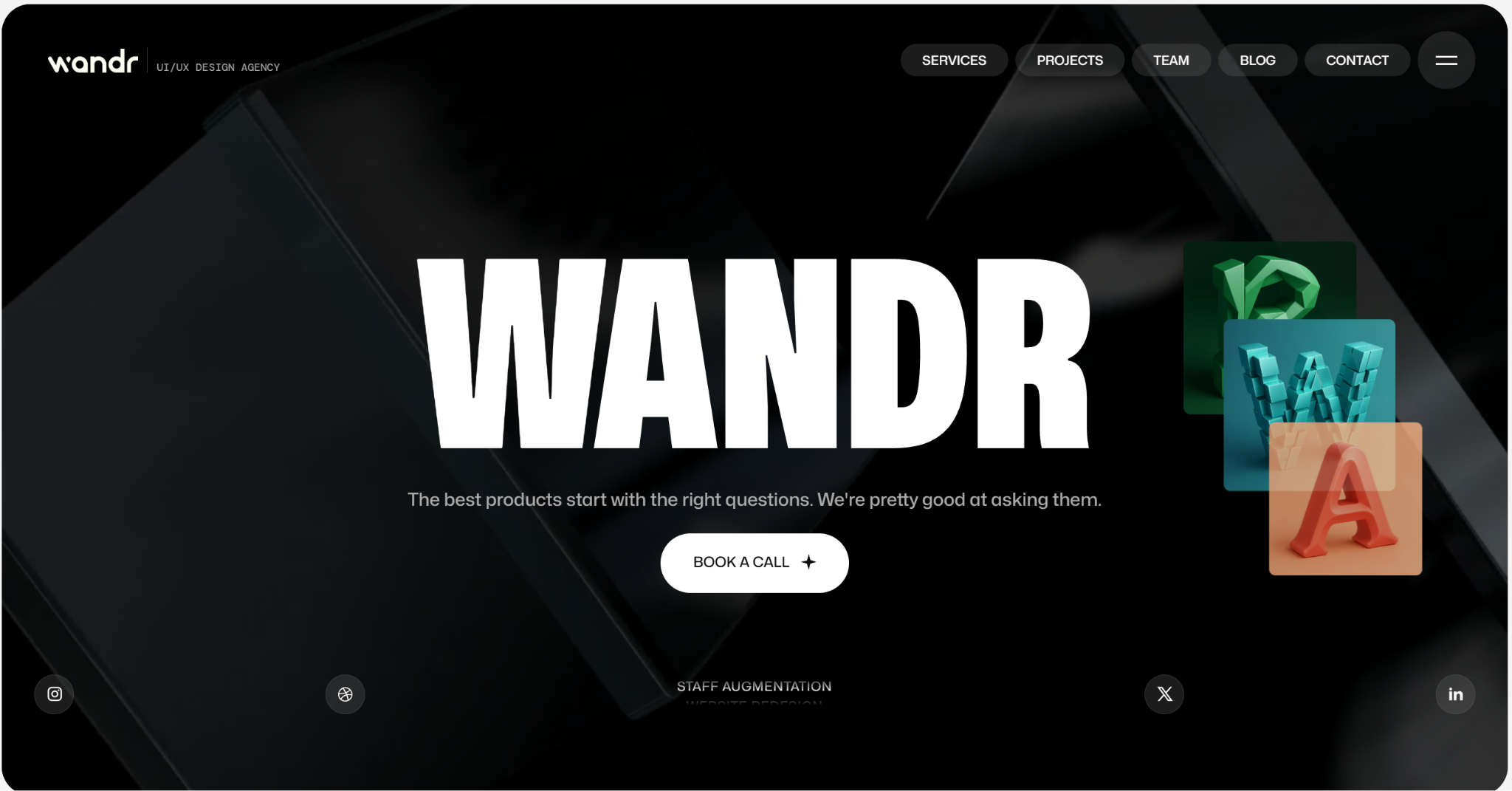
Specialization
WANDR is an award-winning UX and product design agency that has completed over 500 projects for clients including Samsung, IBM, and the US Space Force. They were named to the Inc. 5000 list of fastest-growing US companies (2022, 2023, and 2024) and received the Clutch Champion Award (2024).
Their approach is strategy-first. They go deep on user behavior, retention, and flow before any screen design begins. If your SaaS product has a usage or activation problem that design can fix, WANDR has the research depth to find it and the execution to solve it.
- Location: Los Angeles, USA
- Founded: 2016
- Team Size: ~30
- Founder: Jinny Oh
- Clutch Rating: 5.0 (34 reviews)
- Hourly Rate: $150-199/hr
- Min. Project: $25,000+
- Services: SaaS UX design, product strategy, user research, scalable interfaces
- Notable clients: Samsung, IBM, Space Force
Best for: Funded SaaS companies with complex UX problems that need research-led strategy before visual execution
15. Clay
Specialization
Clay builds high-converting landing pages and product interfaces for ambitious tech companies. They designed Slack's interactive demo experience and have worked with Stripe, Coinbase, and Uber. If you want your SaaS product to feel like a category leader from launch, Clay has the portfolio to back that ambition.
They take on few clients at a time and partner deeply on branding, product SaaS UX, and marketing design simultaneously.
- Location: San Francisco, USA (with offices in New York, Austin, Denver, Lisbon, Belgrade)
- Founded: 2009
- Team Size: 78
- Founder: Anton Zykin
- Clutch Rating: 4.8 (32 reviews)
- Hourly Rate: $150-199/hr
- Min. Project: $50,000+
- Services: SaaS product UI/UX, website design, branding, design systems
- Notable clients: Slack, Stripe, Coinbase, Uber
Best for: Well-funded SaaS companies that want premium-tier design and have the budget for it
How to Find the Best Web Design Agencies for B2B SaaS Companies
There are hundreds of SaaS website design agencies. Most can build a decent-looking website. Far fewer understand B2B SaaS specifically: longer sales cycles, multiple stakeholders, and complex buying processes involving procurement, security reviews, and sign-off chains.
Here is how to filter the list.
Look for real B2B SaaS case studies.
Not every agency claiming SaaS experience has built for B2B buying processes. Ask for case studies involving complex SaaS products, enterprise buyers, or subscription models. Portfolio screenshots are not proof. Results are. Look for numbers: traffic, conversion rates, revenue, time-to-close improvements.
Ask how they approach messaging and structure.
In B2B SaaS, clarity beats cleverness. A good agency structures information so buyers understand what you do, why it matters, and what to do next. Ask specifically how they approach value proposition clarity and information hierarchy, not just which colors they plan to use.
Understand their view on conversion.
Hot take: if an agency talks about "omnichannel synergies" before they ask about your product, walk away. The right agency talks about lead quality, buyer intent, and conversion paths. If conversion strategy is an afterthought in their pitch, that tells you everything.
Check for technical and CMS flexibility.
Your SaaS website will change as your product evolves. Make sure the development agency builds on a platform your marketing team can manage independently. This matters especially for SaaS teams that need cross-platform consistency across web and product surfaces without constant developer involvement.
Be honest about what you need.
Some agencies excel at strategy and positioning. Others at execution and delivery. If your messaging is still evolving, a strategy-led partner makes more sense. If your direction is clear, an execution-focused agency gets you to launch faster.
Why High-Performance Websites Drive SaaS Growth
For SaaS companies, the website isn't a brochure. It's part of the product experience. For self-serve models, it is the product experience. Users sign up, explore, and purchase without ever speaking to a salesperson. The website either closes that loop or it doesn't.
Speed is a conversion lever, not a technical detail
A 100ms delay in page load drops sign-up conversions by approximately 7% (5). Only 32% of SaaS websites load key content in under 3 seconds, and just 42% meet the 5-second full page load target, according to Catchpoint's 2025 SaaS Website Performance Benchmark Report.
Hot take: if your homepage takes 5 seconds to render, that's not a "performance issue." It's a leaking bucket your paid ads team is quietly filling every day.
Bad messaging kills retention before users reach first value
Median NRR across SaaS companies has stabilized at around 90% (1). The average product retains 9 of 10 customers annually, according to the 2025 High Alpha SaaS Benchmarks.
That number holds when the product delivers what the website promised. It drops fast when the website oversells, messaging is unclear, or onboarding flows are too confusing to complete. A poorly structured SaaS website erodes the retention baseline before users ever experience the product.
Weak landing pages waste paid acquisition
Companies in the top quartile for time-to-value delivery achieve 62% better conversion rates and 38% higher overall performance scores (6), according to the 2025 State of B2B SaaS Marketing report. Product-qualified leads (users who have experienced your product through the website) convert 30% faster than marketing-qualified leads.
You can spend aggressively on paid acquisition. But if your landing pages fail to hold attention and guide visitors to action, every dollar is partially wasted.
Enterprise buyers evaluate before they call
Large enterprise organizations now spend more than $5 million per month on SaaS tools alone (2), according to Flexera's 2026 State of the Cloud Report.
That level of investment means buyers scrutinize vendors with real rigor before booking a call. A weak website isn't just a missed conversion. It's a disqualifying signal for buyers who move on before you even know they were there.
What this means for your agency choice
The agencies that win in B2B SaaS treat performance, messaging clarity, and conversion paths as the actual product. Not garnish. Foursets ships sites with a 96.8% on-time delivery rate and PageSpeed scores that consistently hit 90+ on desktop and 75+ on mobile, because in SaaS, "fast and clear" is the conversion strategy.
SaaS Web Design Trends in 2026
Concrete product imagery over abstract visuals.
SaaS buyers want to see what your product actually does. Real screenshots, annotated UI, and in-context product shots now outperform abstract illustrations. If your homepage cannot show the product in the first scroll, you are losing buyers before the conversation starts.
AI-optimized content structure.
With Google AI Overviews and large language models citing web pages directly, SaaS website design now requires structure that AI systems can extract and quote accurately. Clear headings, answer-oriented paragraphs, and semantic HTML all matter more than they did a year ago (3).
Authentic video over animated explainers.
Real product demos and client testimonials consistently outperform animated walkthroughs. Research indicates that authentic video content on high-converting landing pages lifts engagement by 30 to 40% compared to static alternatives (4).
Personalization at smaller scale.
SaaS teams can now adapt landing page content by company size, industry, or intent signal without enterprise-level resources. Tools like Webflow Optimize are making this accessible at growth stage, not just enterprise.
One important caveat: buyer skepticism around AI is rising. According to Deloitte's Tech Trends 2026, only 11% of organizations have actually deployed agentic AI systems in production (7), yet the majority of SaaS marketing sites claim "AI-powered" everything. SaaS buyers notice the gap. Personalization works best when it is grounded in real behavior data, not AI hype.
Design systems as a growth asset.
Mature SaaS brands treat design systems as a competitive advantage. Consistent visual language across digital products, marketing websites, and documentation builds trust at every touchpoint. Cross-platform consistency is increasingly a buying signal for enterprise buyers.
Accessible design as a baseline.
Leading agencies now build accessibility into every phase, from color contrast to keyboard navigation and screen reader compatibility. For enterprise buyers in regulated industries, accessible design is not optional.
Product-led growth demands self-serve web experiences.
Deloitte's Tech Trends 2026 identifies the shift toward lean, product-led teams as a defining organizational change (7). For SaaS marketing, this has a direct consequence: the website needs to do more of the selling work on its own. Clear in-page demos, self-serve trial flows, and structured content that answers buyer questions without a sales call are no longer nice-to-have. They are table stakes for SaaS companies that want to grow without scaling headcount in proportion. Agencies that understand PLG architecture are increasingly the ones worth hiring.
Conclusion
Picking the right agency from this list is not about choosing the prettiest portfolio. It is about finding a team that gets how SaaS companies grow, how buyers evaluate platforms, and how a website can actively support revenue.
The top SaaS design agencies in this list have proven that across SaaS startups, growth-stage platforms, and enterprise teams. If you are building or scaling a SaaS business, your website deserves a team that takes it as seriously as you do.
Ready to Build a SaaS Website That Actually Converts?
Imagine this: your SaaS website actually works. Loads fast. Ranks on page one. Converts trials. No three-vendor coordination headaches. No junior interns quietly handling your codebase. No missed launch dates.
Foursets has been building high-performance SaaS websites on Webflow since 2021. Design, development, and SEO under one roof. Senior team. 96.8% on-time delivery. Radical transparency from kickoff to launch. Contact us today!
FAQ
What is a SaaS website?
A SaaS website is the marketing and conversion surface for a software-as-a-subscription product. Unlike the product UI, it is the public-facing site that explains what the software does, why it is worth buying, and how to get started. For most SaaS products, the website drives signups, demo requests, and trial activations. It is the first thing a buyer evaluates before agreeing to a conversation.
What is SaaS in web design?
SaaS in web design refers to the specific requirements that come from designing for SaaS companies: subscription models, pricing tiers, trial-to-paid conversion flows, longer sales cycles, and multiple stakeholders in every buying decision. It is a different discipline from e-commerce or consumer product design. The messaging, structure, and conversion logic need to match a fundamentally different buying process.
What should I look for in a SaaS web design agency?
Look for agencies with real B2B SaaS case studies, transparent pricing, and a clear process for handling both design and technical SEO. Ask whether they have experience with onboarding flows and trial conversion, not just marketing sites. Ask who will actually work on your project. The team that pitches you should be the team that builds your site. If the answer is vague, keep looking.
What is the best website builder for SaaS?
Webflow is the leading choice for SaaS marketing websites in 2026. It combines pixel-perfect design control, a built-in CMS, native SEO tools, and fast hosting. Most of the agencies on this list build on Webflow. It gives SaaS teams full content control without needing a developer for routine updates, which matters a lot as your product messaging evolves.
How much does a SaaS website design cost?
Pricing varies significantly by agency tier and project scope. Budget-friendly agencies like CodeTheorem start under $25/hr. Mid-market agencies like Foursets, Arounda, and Cieden typically range from $25-99/hr with project minimums of $5,000-$10,000. Premium North American agencies like Baunfire, Clay, and Ramotion start at $150-199/hr with minimum engagements often exceeding $50,000. Monthly retainers range from $3,000/month for design-only support to $10,000+/month for full-service ongoing work.
How long does it take to build a SaaS website?
Most full website projects take 4-10 weeks from kickoff to launch. Simple marketing sites with clear messaging can be completed in 3-4 weeks. Complex projects involving multiple stakeholders, custom animations, CMS buildout, and integrations typically run 8-12 weeks. Enterprise projects with audit, strategy, and full redesign phases can take 4-6 months. Timeline depends heavily on how quickly feedback is provided and decisions are made on the client side.
Specialized SaaS design agency vs. freelancer, which is better?
A freelancer is faster and cheaper for small, well-defined tasks. An agency is better when you need design, development, and strategy to work together, when you cannot afford execution gaps, and when the project has real revenue stakes. Freelancers disappear. Agencies have processes. For a core SaaS marketing website that has to rank, convert, and scale, the right SaaS design agency is almost always the better investment.
Do I need a SaaS-specific web design agency?
If your product has a subscription model, a multi-step buying process, or requires explaining a complex platform to a skeptical buyer, yes. A generalist agency can make your site look good. A SaaS agency understands trial conversion flows, product-led growth hooks, and how to structure a page for a buyer who has seven competing tabs open. The difference shows in results, not mockups.
References
1. High Alpha, 2025 SaaS Benchmarks Report, https://www.highalpha.com/saas-benchmarks
2. Flexera, 2026 State of the Cloud Report, https://info.flexera.com/CM-REPORT-State-of-the-Cloud
3. Gartner, Generative AI and Search: Impact on Digital Marketing, 2024, https://www.gartner.com/en/newsroom/press-releases/2024-02-19-gartner-predicts-search-engine-volume-will-drop-25-percent-by-2026-due-to-ai-chatbots-and-other-virtual-agents
4. HubSpot, Video Marketing Research Report, 2024, https://blog.hubspot.com/marketing/video-marketing-report
5. Catchpoint, 2025 SaaS Website Performance Benchmark Report, https://www.catchpoint.com/learn/2025-saas-website-performance-benchmark-report
6. Acquire Digital Talent, State of B2B SaaS Marketing in New York, 2025, https://acquiredigitaltalent.com/wp-content/uploads/2025/08/State-of-B2B-SaaS-Marketing-in-New-York-2025-White-Paper.pdf
7. Deloitte, Tech Trends 2026, https://www2.deloitte.com/us/en/insights/focus/tech-trends.html


Key Takeaways
- There is no single "best" SaaS web design agency for everyone. The right fit depends on your company stage, product complexity, and budget.
- Some agencies are design-led. Others focus on development, conversion strategy, or product UX. Knowing which you need narrows the list fast.
- B2B SaaS teams should prioritize clean CMS architecture, page performance, conversion flows, and SEO foundations from day one.
- Agencies that understand SaaS buying cycles, trial-to-paid conversion, and onboarding flows consistently outperform generalists on outcomes.
- Starting prices vary widely: from under $25/hr at budget-friendly studios to $150-199/hr at premium North American agencies.
- If bold visual identity and motion design matter most, design-first studios like Clay or Qream may be your best match.
- If performance, CMS flexibility, and long-term maintainability matter more, development-first teams are the safer bet.
- Foursets is built for B2B SaaS companies that want design, Webflow development, and SEO under one roof, without managing three separate vendors.





.avif)